


This question is the natural follow-up to Question 4, and it is just as fundamental. Just as lasting ethics can only exist if they have been established by a Creator, so too is the world around us comprehensible because it has been created by the Creator. Although some who deny the existence of the Creator may argue in the blind randomness of nature, no one actually lives as if that were the case. Indeed, though many think Christianity and science to be at odds with one another, the Christian worldview provided the roots of the scientific revolution. Because Christians believe that the God who has made Himself known to us is the Creator of the world, they also believed that His creation was knowable and reflected aspects of Himself. Thus, it should come as no surprise to us that a great deal of modern science is becoming increasingly unscientific as much science continues to distance itself from God the Creator. But I have written on that subject elsewhere, and I only present it again here to help establish the practicality of this question.
Let us observe the answer piece by piece. First, God created all things. Everything, whether physical or spiritual, visible or invisible, great or small, was created by God. Thus, just as an author has ownership over his book or an inventor has ownership over his invention, the Creator of all things owns all things. All things are His because He brought them into existence. Frequent meditation upon this truth ought to humble us and exalt our reverence for God. We are not owed air, water, earth, sunsets, and the sweetness of honey dripping from the honeycomb. He freely created and sustains all things out of His abundant grace.
Second, God created all things by his powerful Word. Of course, throughout Genesis 1, we read of God creating the world by speaking things into existence, yet the New Testament reveals that God’s Word is a person, Jesus, the eternal Son of God. John 1:3, Colossians 1:16, and Hebrews 1:2 all affirm this truth. Because Jesus is the Word through whom all things were made, He is the Creator, worthy to receive the glory of His creation.
Third, and all his creation was very good. This assessment is made in Genesis 1:31, which reads:
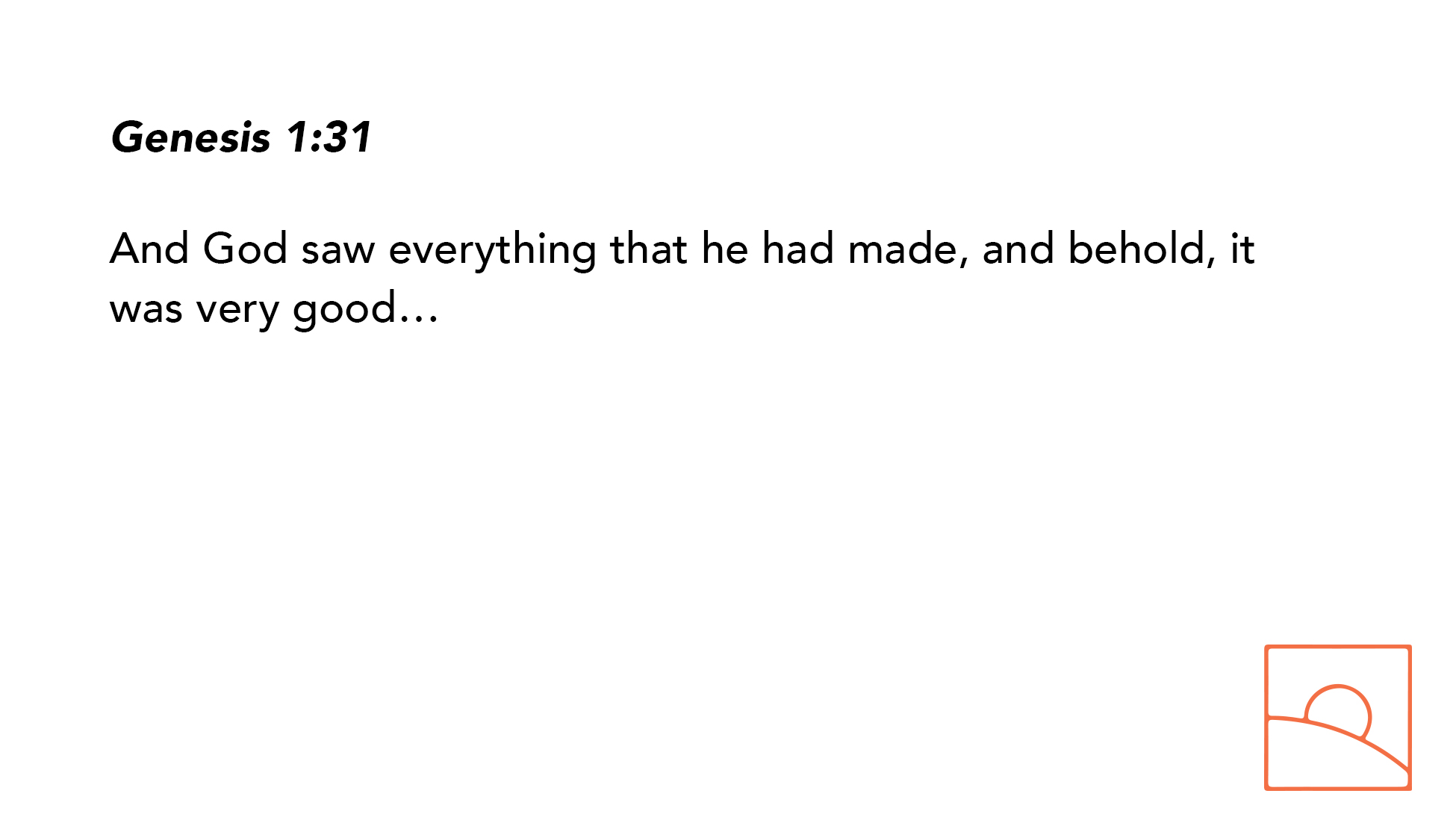
God’s creation of all things establishes the great truth that the Creator owns His creation, but this pronouncement that His creation was very good establishes another truth: creation reflects the Creator. God is good, and it is right that the works of His hands would also be good. David could look to the heavens to glimpse something of God’s glory and Solomon could study the ant to glean a nugget of divine wisdom because the goodness of creation testifies to the goodness of its Creator.
Of course, we can never expect to know God fully through His creation, but we would veer into an opposite but equally erroneous idea by refusing to acknowledge the reality of natural revelation. Studying van Gogh’s paintings can certainly teach us some things about van Gogh himself, but they could never replace reading a biography about the painter. So it is with how we are able to know God through creation versus through His written Word.
We should also note the importance of affirming the goodness of God’s creation against the perennial heresy of Gnosticism. A key tenet of Gnostics was the goodness of the spiritual and the wickedness of the physical. Thus, through its rejection of the body, Gnosticism led to both severe asceticism (since the body needed to be beaten into submission) as well as unhindered licentiousness (since the body was unimportant). The present-day brand of Gnosticism is a variant that might be called Digital Gnosticism since it replaces the spiritual world with the digital one. Like our brothers and sisters of the early church, we must be prepared to resist the going appeal to transcend our physical bodies through ever advancing technology. God made all creation very good, and we ought to reject any attempt to be liberated from it.
Finally, everything flourished under his loving rule. In its original state, everything flourished. Flourished is a fitting word to use since it shares etymological roots with flower. God’s creation was not productive like an economy or efficient like a machine; it flourished like the flowers within the Garden that God Himself planted as its center.
However, while there certainly is still beauty and flourishing to be seen, that is by no means the constant reality. Famine, drought, pestilence, and a whole host of natural disasters afflict humanity. Thus, we are left with a grand tension. What has gone wrong that creation does not seem to flourish as it once did? And perhaps more importantly, is creation still under God’s loving rule?
Questions 14, 26, and 52 will particularly answer that lingering tension.
For read more resources related to the New City Catechism, including children’s songs, visit newcitycatechism.com or download the app.
 B. C. Newton