

With the person and work of the Holy Spirit addressed in the previous two question, we move now into the topic of prayer. This is fitting since it is only through power of the Holy Spirit that we can pray to God as our Father, as our Lord has taught us to pray. Indeed, as we discuss prayer, the Word of God, the ordinances, and the church throughout the next several questions, we should remember that it is the Spirit who is working these means of grace.
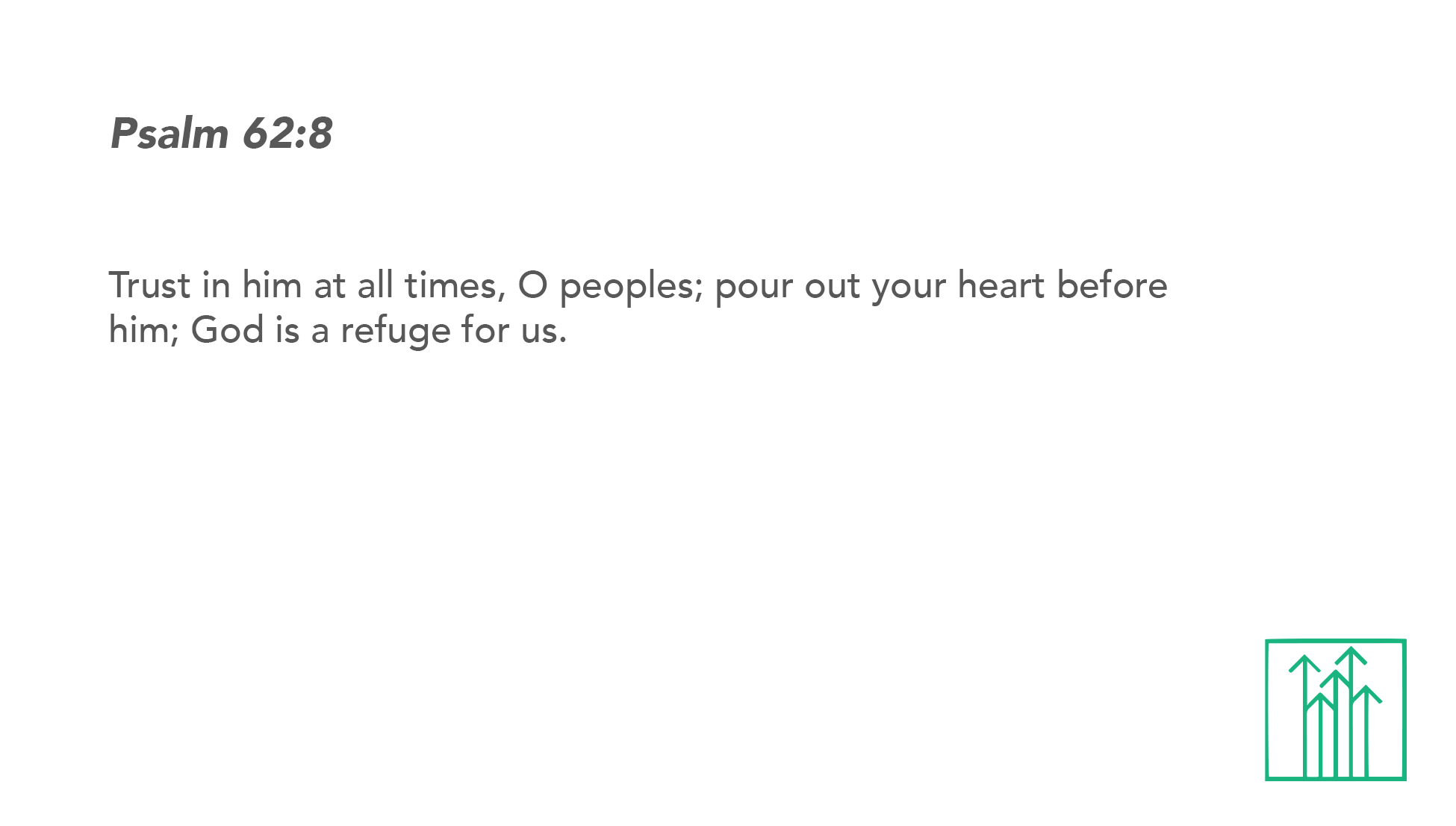
We begin the catechism’s treatment on prayer by defining it: prayer is pouring out our hearts to God in praise, petition, confession of sin, and thanksgiving. This is lifted almost directly from Psalm 62:8:
Prayer is the act of us bringing our hearts before God. And God commands prayer because we can only pour out our hearts to God by first trusting in Him. Indeed, whenever we truly pray to God, we acknowledge that He is God and we are not. We pray to Him precisely because he is holding all strength and power, while we are frail and needy.
As we pour our our hearts to Him, we do so in four different ways. First, we pour forth praise from our hearts. The more we come to know our God, the more His praises should flow from our tongues. Indeed, our eternity will be spent doing so. For all time, we will continuously come to know God more and more and will, therefore, have an ever greater desire to praise Him. Let us begin doing so now. The following psalms and doxologies provide great guides for learning to praise God.
Psalm 8, 19, 33, 34, 103, 109, 145
New Testament doxologies: Romans 8:38-39; 11:33, 36; 15:5-6; 15:13; Ephesians 3:20-21; 1 Timothy 1:17; 6:15-16; Hebrews 13:20-21; 2 Peter 3:18; Jude 24-25; Revelation 1:5-6; 5:12-13; 7:12; 22:20-21
Second, we pour out our petitions to God. Jesus, of course, taught us to do this in the second half of the Lord’s Prayer. We should also consider Paul’s charge in Philippians 4:6: “Do not be anxious about anything, but in everything by prayer and supplication with thanksgiving let your requests be made known to God.” Anxiety is excessive worry about something, and Scripture tells us to fight it by taking all of our requests to God. We should certainly keep in mind that this does not mean that God will grant all of our requests. Yet we should bring them to Him and trust His perfect will. We should also remember that petitions include laments, which are bring to God our trouble, sorrow, or suffering.
Third, we ought to confess our sins to God in prayer. Through confession, we acknowledge the guilt of our sin before God and cry for His mercy and grace. Confession is a daily necessity because even though Christ has rescued us from our sins, we will not cease to sin until He returns or calls us home. By confessing our sins, we repent and strive for future obedience. 1 John 1:10 tells the importance of confession: “If we say we have not sinned, we make him a liar, and his word is not in us.”
Finally, we give thanksgiving to God in prayer. In 1 Thessalonians 5:16-18, Paul writes: “Rejoice always, pray without ceasing, give thanks in all circumstances; for this is the will of God in Christ Jesus for you.” God’s will for our lives is to give thanks to Him in all circumstances. As the Creator, our God has given us the ground we stand on, the air we breathe, the water we drink, rain and sunshine, friends and family, meat and fruit, dogs and cats, and everything else. Every good gift we have comes from Him (James 1:17-18). We, therefore, always have something to give thanks for. There is no circumstance in life where we cannot thank God for something He has done for us.
 B. C. Newton