

My last sermon of 2025 was titled Why Did God Write Poetry? I attempted answering that question because most of us today treat poetry as unnecessary and purely intellectual, ornamental rather than essential. Yet roughly one-third of Scripture is written in poetry. Thus, if we lack a proper appreciation for poetry, we will also struggle to appreciate a massive portion of God’s Word as we read it.
I preached that sermon because I intend to preach from Song of Songs and Hosea this year, as well as my practice of beginning each year with a psalm and a proverb.
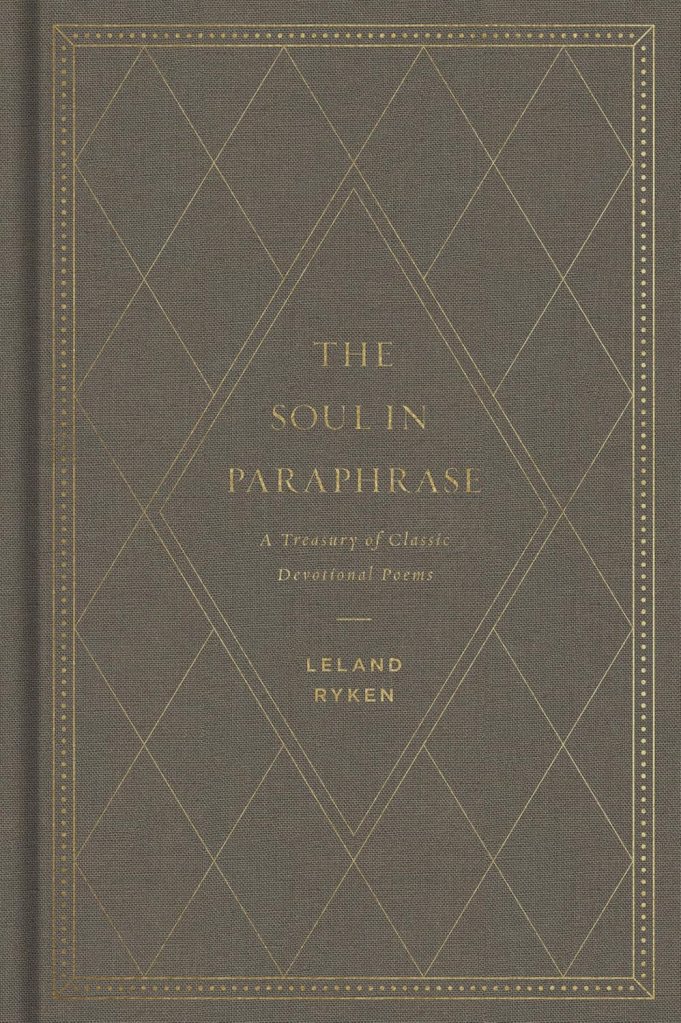
For those who would like to develop a greater appreciation for poetry in general, one of the best places to start is Leland Ryken’s The Soul in Paraphrase: A Treasury of Classic Devotional Poems.
It had the proper feel of a devotional: hardcover, ribbon marker, and well-made for much reading. The book is arranged chronologically, so Ryken essentially gives you a crash-course in Christian poetry throughout church history.
For each poem, Ryken provides brief notes on potentially unfamiliar words or phrases and then a short commentary, in which we draws attention to poetic elements that we might have missed. He also reflects on it devotionally.
As both a theologian and a literary professor, Ryken is an excellent guide to these poems, and his introduction should not be ignored. I have made use of his distinction between literature of belief, literature of common experience, and literature of unbelief often.
If you have any desire to explore poetry as a literary form but do not know where to begin, this is as good of a place as I can find. A simple and fruitful practice would be simply to read one poem a day or even ever two or three days, giving time for meditation and noticing what makes it beautiful.
This book will introduce you to many of the great poets of church history under the hand of a wise guide. The Soul in Paraphrase is an invitation into a deeper love of poetry, which is a really a deeper love for God-glorifying beauty in words.
 B. C. Newton