
Leo Tolstoy’s War and Peace was my big reading project last year, and it was excellent. I loved the great epic journey of the book. Of course, any book that large is bound to drag in places, but the characters always kept me going.
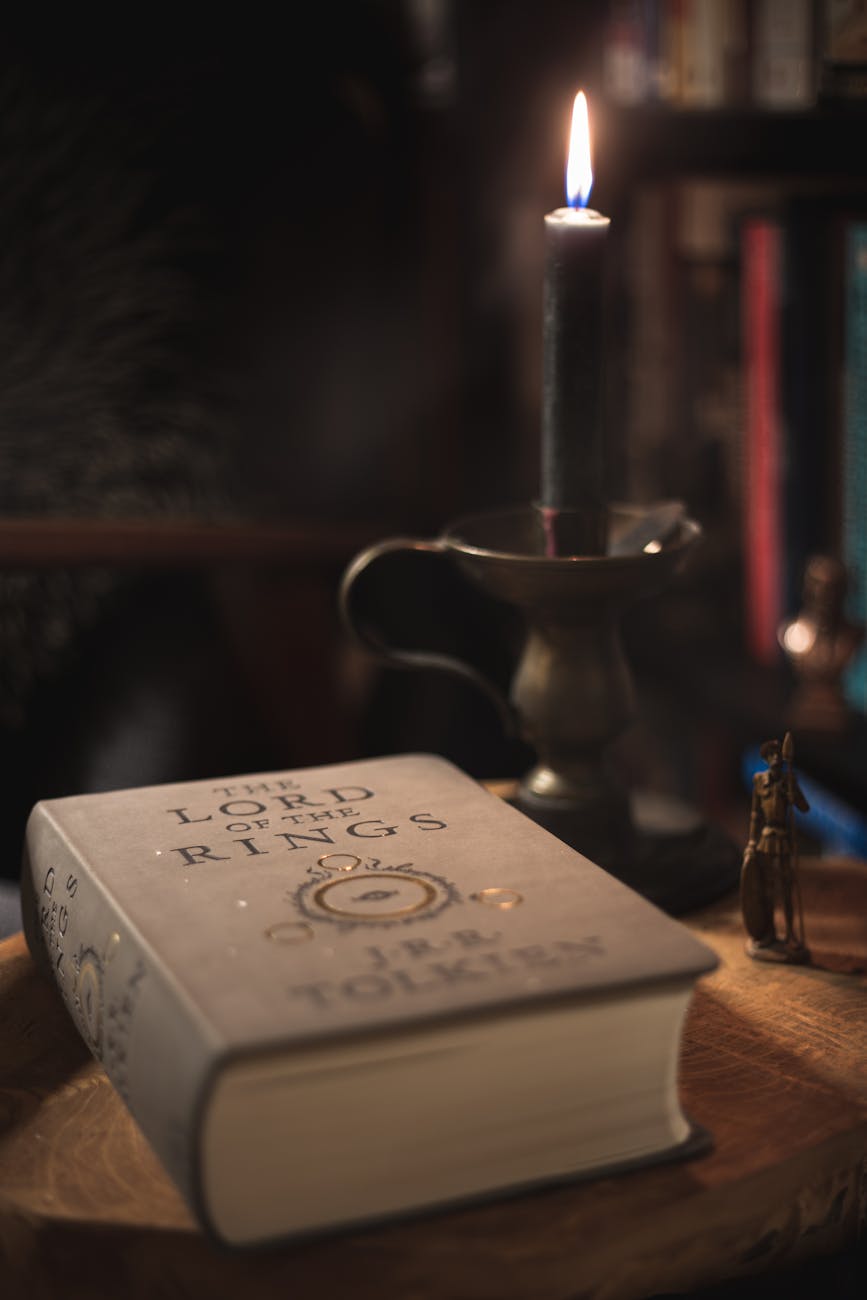
I enjoyed War and Peace so much at, at one point, I even wondered if it would usurp The Lord of the Rings as my favorite novel of all time.
In fact, I began War and Peace because I heard someone on a podcast say that The Lord of the Rings was essentially a fantasy version of War and Peace.
While there are parallels between both epics, the comparison is certainly over-reaching. The two epics are quite distinct, and despite my great love for Tolstoy’s work, Tolkien’s retains its place in my heart.
Why is that?
The core of that matter seems to be that the two epics resonate with different phases of life and, therefore, different themes.
War and Peace and Education
I agree with Sir Niall Ferguson that War and Peace is primarily about education. Tolstoy certainly explores the philosophy of history in many essays that he inserts into the book, but the central theme of the story is the education of Pierre Bezukhov.
Pierre’s journey is education in the broadest sense. He is a young man, still trying to understand himself and what to do with his life. Over the course of the book, he is educated, undergoing a variety of philosophical changes as he searches for meaning and purpose.
That central focus on the uncertainty of youth now has a nostalgic resonance with me. Being in my mid-thirties, I now have an established career, a family, and plenty of responsibilities. The uncertain middle period of late adolescence has passed by for me, but it was fascinating to take that journey again through the eyes of Pierre.
The Burden of Responsibility
The Lord of the Rings, on the other hand, has the burden of responsibility as one of its key themes. I first read The Lord of the Rings again as an adult whenever my father-in-law was dying from cancer. My wife devoted most of her time to him, and I was, in many ways, a single dad to our toddler for that season of life.
Reading The Fellowship of the Ring actually felt real then. I didn’t have the one Ring, but I did have a great deal of burdens on my shoulders.
And every main character has a burden to bear. Frodo, of course, has the Ring. Sam carries Frodo. Gandalf carries the fate of Middle-earth on his shoulders. Aragorn carries the weight of the crown and a crumbling kingdom. Boromir and Faramir carry the burden of their father’s expectations and their men’s loyalty.
And I think this is why The Lord of the Rings hits so deeply with men. Of course, women bear burdens of responsibility, and there are certainly plenty of women who are fans of The Lord of the Rings. But there is something deeply masculine about shouldering a profound task that only you can carry.
Shouldering the Burden
We see this same pattern in Scripture. A favorite example of mine is Joseph. Though Jesus was not his biological child, Joseph shouldered the burden of caring for Mary and our Lord’s adopted, earthly father. And he was in charge of his family’s safety, as we see when God tells him to go to Egypt.
Like many men in history, Joseph often doesn’t get much credit for shouldering those responsibilities. We sing songs about Mary, but Joseph quietly does the masculine task: carry the responsibility without seeking glory or gratitude, shoulder the burden because it is the right thing to do.
The characters in The Lord of the Rings reflect that same understanding of responsibility and cost. Frodo’s victory is not rewarded with perfect peace; his burden leaves him permanently changed. He cannot truly enjoy the Shire that he saved. The success of Gandalf and the elves means that they leave Middle-earth forever. Aragorn receives the crown, but he knows that his task is to rebuild a past glory that cannot fully be captured again.
The Lord of the Rings resonates with men, especially those with families, because we feel the same burden of responsibility. Reading Tolkien’s work is like joining a band of brothers. Seeing Frodo, Sam, Aragorn, and the others do what must be done reminds us that we too must do what is required of us, even when we feel selfish or defeated.
At least, that’s why I keep taking the journey through Middle-earth.
 B. C. Newton