
In both the Apostles’ Creed and the Nicene Creed, which are the most widely confessed creeds in Christianity, a large portion focuses upon the person and work of Jesus Christ.
And rightly so.
We are Christians, after all. When we speak of Christ’s work, we marvel at the incarnation, which Packer once claimed is the most difficult to believe miracle. If you can believe that God became a man, then no other miracle in Scripture should be too difficult to believe.
We also rightly glory in the crucifixion of our Lord, for there Christ became the once-for-all sacrifice for our sins. And we stand firmly upon the resurrection, knowing that without it our faith is in vain, as Paul wrote. And we eagerly await Christ’s return to make all things new.
Yet between the resurrection and second coming stands the ascension of Christ, which is rarely given much thought. But the ascension is a vital part of Christ’s redemptive work, as this question of the catechism affirms.
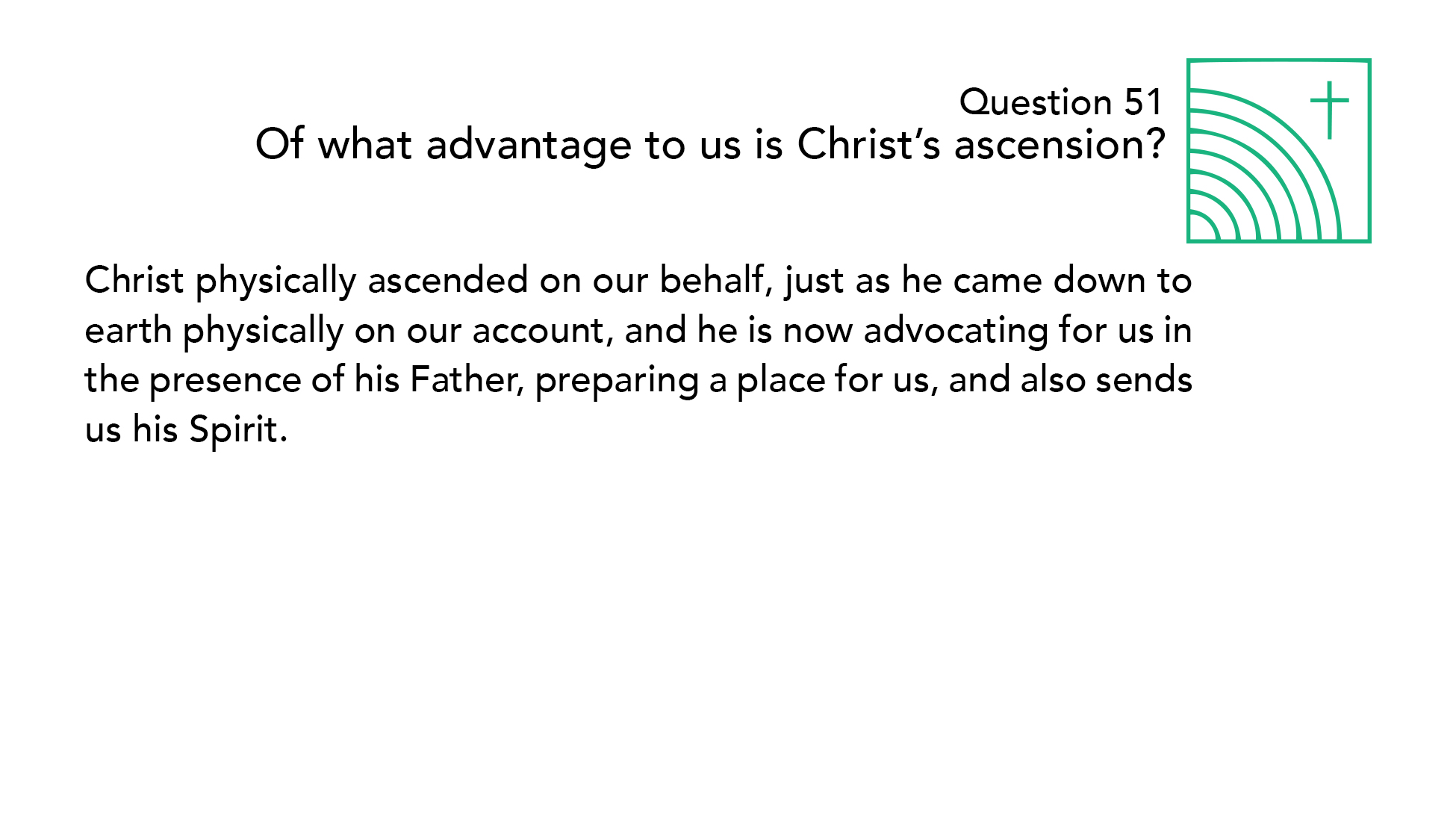
Notice first the phrase that Christ ascended on our behalf. Christ physically ascended just as He physically came down to earth. He took on true flesh in the incarnation, He rose back to life physically in the resurrection, and He bodily ascended to heaven. He is presently seated at the right hand of the Father in glorified human flesh.
And this was for our benefit.
In John 16, Jesus explicitly tells His disciples: “it is to your advantage that I go away” (v. 7). The ascension is not Christ abandoning His people but advancing His work for us. The catechism then lists three benefits of Christ’s ascension.
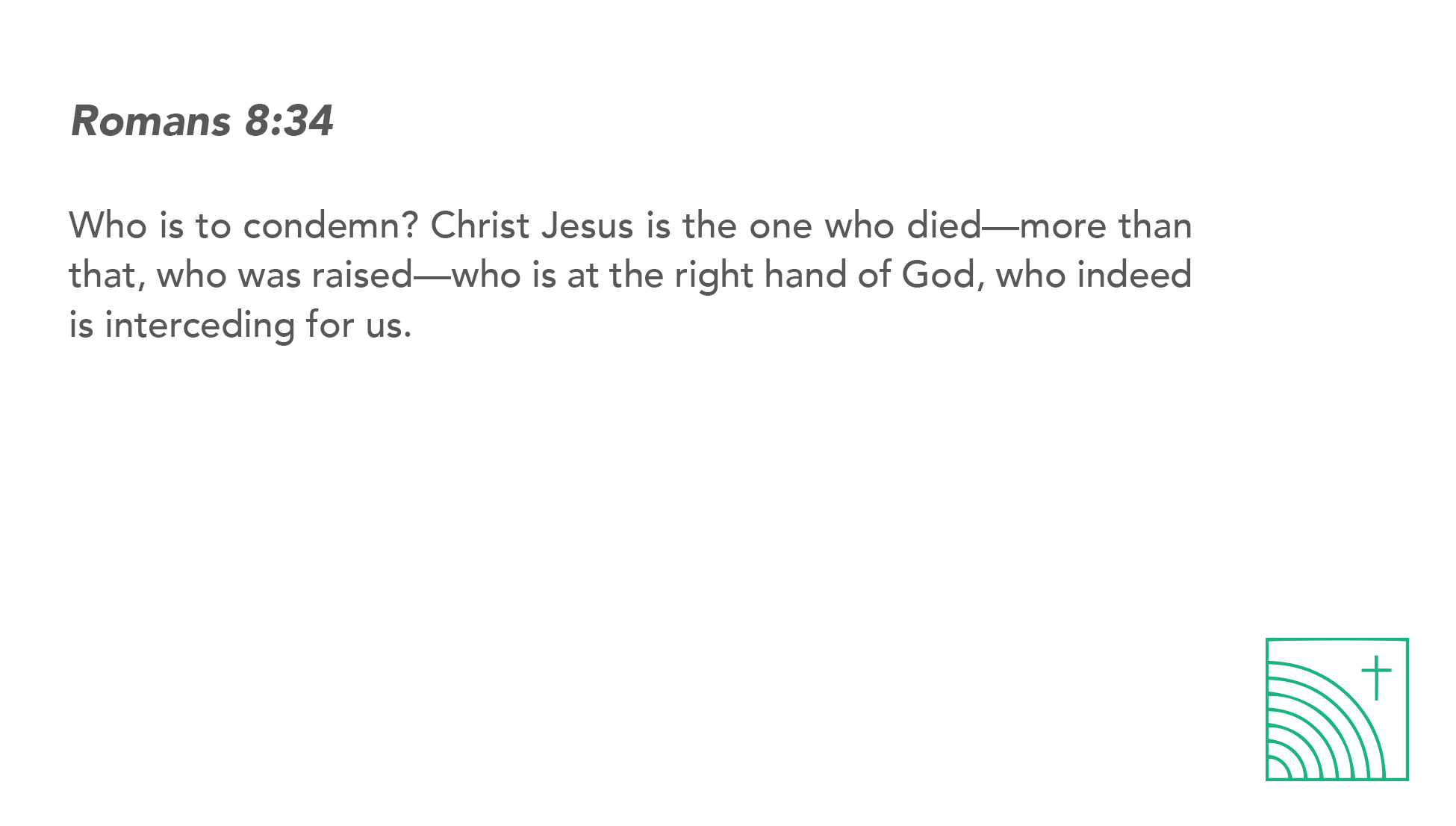
First, Christ is now our advocate before the Father. The book of Hebrews emphasizes Christ’s sacrifice for our sins, but it also teaches us about Christ’s ongoing priestly ministry. He certainly the Lamb who was slain, but He is also now our great high priest who lives forever to intercede for us.
In the Old Testament, the priest represented the people before God. As we offered their sacrifices, he bore their names before the Lord and prayed for them.
That is what Christ does now.
We boldly approach the throne of grace because Christ is representing us and interceding for us.
We see a glimpse of this in Jesus’ earthly ministry whenever He tells Peter that Satan has demanded to sift him like wheat. But Jesus tells Peter that He has prayed for him. Scripture says that the prayer of a righteous person has great power. How much more the prayers of the Righteous One Himself? Christ’s intercession is perfect. His will is perfectly aligned with the Father’s will, so all that He prays will come to pass. His advocacy is beautifully effectual.
Second, Christ ascended to prepare a place for us. In John 14, Jesus said:
In my Father’s house are many rooms. If it were not so, would I have told you that I go to prepare a place for you? And if I go and prepare a place for you, I will also come again and will take you to myself, that where I am you may be also. (vv. 2-3)
Of course, we should not read this as though Christ has been doing a 2000-year-long building project in heaven. Instead, the emphasis is that Jesus’ ascension to heaven is a guarantee of His bringing us to heaven as well. Just as Christ is the firstfruit of the resurrection, His ascension also guarantees our eternal home with Him.
Third, Christ has sent His Holy Spirit. This is specifically why Christ said His ascension was advantageous to His disciples: “for if I do not go away, the Helper will not come to you. But if I go, I will send him to you” (16:7).
In His earthly ministry, Christ in His humanity was only able to present in one place at a time. But through the sending of the Spirit, Christ’s presence is now with all His people everywhere.
At Pentecost in Acts 2, the Spirit was poured out, and now every believer is indwelt by the Holy Spirit. He then empowers us to be united to Christ, to mortify our sin, to bear the fruit of holiness, and to walk in obedience to Him.
So Christ’s ascension means that He is our great high priest, that He is preparing our eternal dwelling with Him, and that He has sent His Holy Spirit to dwell within us. The ascension of Christ ought to be a doctrine of deep assurance and joy.
Let us, therefore, rejoice that Christ has gone before us, that He reigns, intercedes, prepares, and empowers.
 B. C. Newton