
Author
Moses is traditionally understood to be the author of Numbers, since it belongs to the Torah or the Pentateuch, which are also called the Five Books of Moses.
I say “traditionally” because some scholars argue that Moses was only one source among several and that the Pentateuch was compiled much later than Moses’ lifetime. Yet Jesus, when citing from the Torah, refers to Moses as the author and even simply calls the Torah “Moses.” Thus, we should gladly affirm that Moses is the author of the first five books of Scripture.
Of course, that does not mean denying the possibility of later editorial additions. The most obvious example is the conclusion of Deuteronomy, which records the death of Moses. Unless Moses prophetically recorded his death beforehand, someone (most likely Joshua) completed the book after Moses died.
Likewise, there are a few small comments that appear to have been added for the benefit of later readers. Nevertheless, none of those keep us from acknowledging Moses as the author.
Theme
Yahweh leads and disciplines two generations of His people in the wilderness, one unfaithful and the other faithful.
Background
Numbers begins with a Hebrew construction that signals continuation, and that is highly intentional, for it cannot be properly read on its own. Numbers must be understood in light of the books before it and of Deuteronomy after it.
The word Pentateuch means “five books,” though John Sailhamer argues that we should instead think of it as “five volumes.” I believe he is correct that Torah is really one book in five parts. Because of this, we cannot understand Numbers outside of the context in which it is embedded.
The Pentateuch can be divided into six large sections. Genesis 1-11 serves as a theological introduction to both the Pentateuch and the rest of Scripture, explaining humanity’s movement further down and further out from the presence of God.

Genesis 12-50 then describes how God begins forming a people for Himself after having scattered the nations at Babel. Genesis is filled with covenant promises that Yahweh makes to Abraham and his descendants. Yet by the end of Genesis, those promises have not been fulfilled. Instead, Exodus opens with the people of Israel becoming slaves in Egypt.
Exodus is primarily about God redeeming Israel and making them His covenant people. The Hebrew title is Names, and Yahweh’s revelation of His name is the book’s central theme. In Exodus, God reveals Himself as Redeemer, Shepherd, and their Covenantal God.
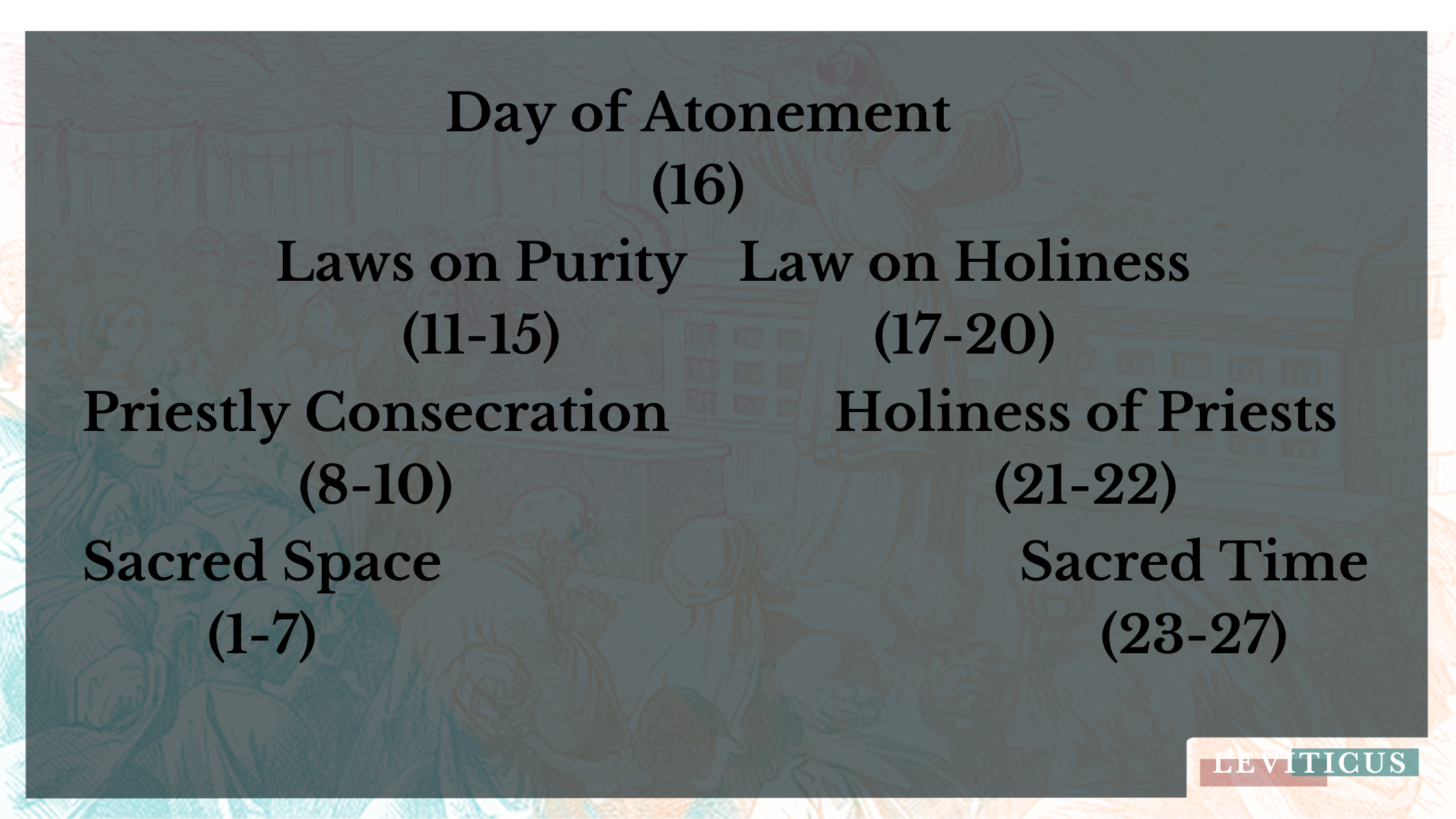
At the center of the Pentateuch is Leviticus. If Genesis 1-11 is about humanity moving away from God’s presence, Leviticus is about Yahweh making a way for His people to move further up and further into His presence through the tabernacle and sacrificial system. Leviticus itself is structured chiastically. The first half concerns how to enter God’s presence, while the second half is about living as God’s holy people.
And that leads us to Numbers.
If Exodus is about God redeeming His people and making them His own, then Numbers parallels Exodus through how God disciplines and refines them in the wilderness. Indeed, Exodus and Numbers are roughly the same length in word count (as are Genesis 12-50 and Deuteronomy).
For our study, we will divide Numbers into three sections based on location, just as we did with Exodus. Exodus 1-14 took place in Egypt, 15-19 in the wilderness, and 20-40 at Sinai. Numbers inverts that pattern. Numbers 1-10 is set at Sinai, 11-25 in the wilderness, and 26-36 on the plains of Moab, which was the edge of the Promised Land.
Purpose
To understand the purpose of Numbers, we must consider its opening verse:
The LORD spoke to Moses in the wilderness of Sinai, in the tent of meeting, on the first day of the second month, in the second year after they had come out of the land of Egypt.
The title Numbers comes from the Septuagint (Arithmoi), which later became Numeri in the Latin Vulgate. The Hebrew title, however, is the books fifth word: In the Wilderness.
Both titles providentially apply to the book. The whole book takes place in the wilderness, which is the place of chaos and disorder but also testing and discipline. But Numbers is also a fitting title. There certainly censuses and numerical arrangements, but most importantly, the book of Numbers emphasizes the necessity of order and structure, to which the numbers testify. Thus, the tension of the book is seen in the two titles. Will God’s people trust Yahweh and His pattern, or will they wander into their own devices?
As we noted, Numbers is divided by three geographical sections, and each section has a particular focus. The first two focus on the Exodus generation, while third concerns the following generation.
In Numbers 1-10, we have a very positive opening. The LORD commands censuses to be taken and arrangements to be made because God’s people were preparing to leave Sinai and enter the Promised Land. And they would do so as the host of Yahweh, an earthly army to parallel the LORD’s heavenly armies.
In Numbers 11-25, we see the faithlessness of the Exodus generation. Rebellion after rebellion fills these chapters, which is why the psalmist and later the author of Hebrews warn us to be harden our hearts like they did.
The final chapters, 26-36, focus on the next generation. These chapters prepare the way for Deuteronomy, where Moses will give the law again to that generation before they conquer Canaan.
Fundamentally, Numbers is about a people between two worlds. They have been redeemed from their life of slavery, but they do not yet possess the Promised Land. They are in the wilderness, where God will discipline them as He shapes them into His holy people.
One subtle theme that is easily overlooked is leadership and societal structure. As we shall see, Numbers is something of a wilderness meditation for leaders.
All of this is important to Christians because our lives are also in the wilderness of this world, as Bunyan called it. We have been redeemed from our slavery to sin, but we have not yet entered our heavenly home. We are journeying through the often chaotic, painful, uncomfortable, and exhausting wilderness.
Yet Israel moved through the wilderness with the presence of God always before them and among them. The same is true for us. As glorious as the tabernacle was, we now have God’s Spirit Himself dwelling within us.
For that reason, Numbers is perpetually relevant for us, even though its censuses and lengthy laws have led to its neglect. But that is to our own detriment. Numbers speaks to our pilgrimage in this world, rebuking our faithlessness, strengthening our perseverance, and teaching us to trust in the provision and design of Lord.
Indeed, Paul specifically told the Corinthians that the events of Numbers “were written down for our instruction.” Though Moses, the Holy Spirit wrote these words for you and me. May He use these words to refine us as His redeemed people and to guide us faithfully through the wilderness and to life everlasting.
Further Resources
Numbers 1-19 | L. Michael Morales
Numbers 20-36 | L. Michael Morales
Numbers: God’s Presence in the Wilderness | Iain Duguid
The Book of Numbers | Timothy Ashley
Numbers: An Introduction and Commentary | Gordon Wenham

