
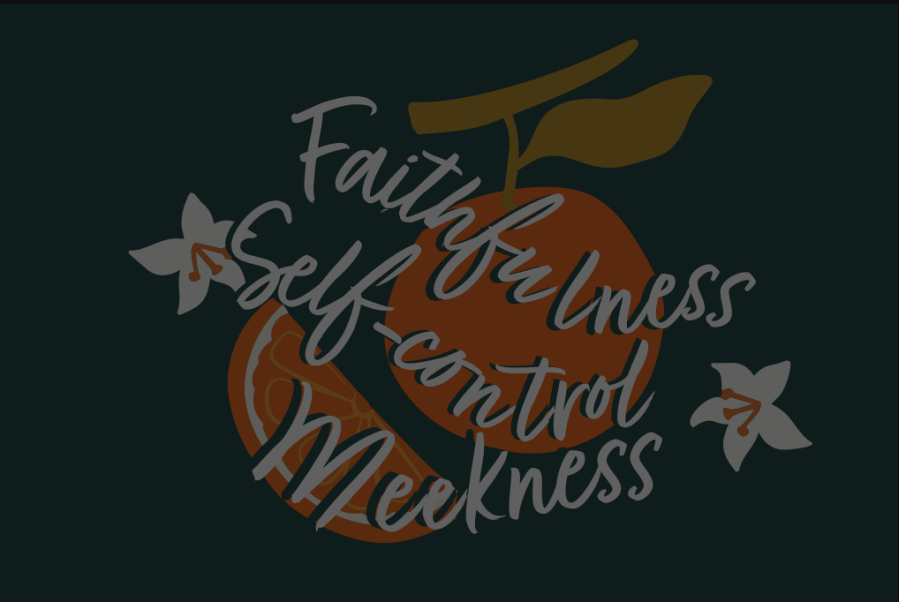
We come now to the final set of virtues. The first three we called the rooted disposition of a fruitful marriage. The next three are its visible expression. These last three round out the list with enduring fortitude because the connective fiber between these three is that they are lasting and enduring virtues. They are what sustains everything else over the course of a lifetime.
UNDERSTANDING THE VIRTUES
The Greek word for faithfulness is pistis. It is sometimes translated as trustworthiness. Interestingly, Sproul ties the Old Testament word chesed to this virtue rather than to agape. Chesed, which the ESV translates as steadfast love, is really the uniting of the two. It is faithful love and loving faithfulness.
Again, faithfulness is a divine attribute of God Himself. He is always faithful to His promises and abounding in steadfast love. As we will see later this year while studying Hosea, God is faithful to His people even when they are unfaithful to Him. Even when He disciplines them, He does not abandon them because He has made a covenant for them to be His people and for Him to be their God.
And that is faithfulness in a nutshell. It is trustworthiness and reliability and being true to one’s word.
Gentleness is the word prautes, though I prefer to translate it meekness. Aristotle called prautes the middle ground between two vices: excessive anger on one side and the inability to become angry on the other. Both extremes were considered a failure of character, quick rage and a passivity or apathy that hinders justified indignation.
There is an adage that meekness is power under control, and I think that strikes near the heart of it. Meekness is the very opposite of weakness. It is carrying the sword but having the restraint to keep it sheathed. It is strength that is governed and precisely directed.
The final virtue is self-control: enkrateia. I love how this virtual is usually called in Spanish: dominio propio, which is self-dominion. Indeed, that captures the meaning quite well. Kratos means power or dominion, which is how the ESV translates it in 1 Timothy 6:16, and the prefix in– means in or within. It is exercising dominion over oneself.
Interestingly, this was considered one of the supreme ideals of classical Greek and Roman philosophy, yet they were unable to practice it fully. Romans certainly had a moral framework, but free men were basically permitted to have sex with anyone except another man’s wife because sexual desire was an appetite that needed to be satisfied just like an appetite for food.
Even among the great philosophers like Plato, we find troubling contradictions. Recently, I was reading Plato’s Symposium, which is one of the foundational texts of philosophy where different speakers at a dinner give speeches in honor of eros. Pausanias’ speech gives a defense for how homoerotic relationships between older men with young men. He acknowledges that many cultures and even many Greeks reject the practice altogether, but he insists that they can be noble. But for me, it just reads like an old man trying to morally justify his attraction to adolescent young men.
You see, those cultures, great as they were, could not live up the very ideals of self-mastery that they so highly valued. And I think that might be precisely why Paul places enkrateia here at the end of the list. He is issuing a quiet polemic against paganism. Love, not self-control, is the supreme Christian virtue. But that great ideal of pagan wisdom, that paganism could not actually achieve, is a fruit of the Spirit. No amount of willpower, grit, or discipline can produce true and lasting self-mastery. The Holy Spirit must produce it within us.
PERFECTED IN CHRIST
As with each of the virtues, we turn to Christ as our supreme example.
Regarding faithfulness, Revelation 19 gives Jesus the title Faithful and True. Paul also tells us that even when we are not faithful, He remains faithful. After all, Jesus Christ is the same yesterday, today, and forever. Surely, we have seen this plenty of times over in our own walk with the Lord. Rightly then do we sing:
Jesus, Jesus, how I trust Him! How I’ve proved Him o’er and o’er!
Regarding meekness, Jesus tells us that He is gentle (or meek) and lowly in heart and that we should come to Him for rest. He is powerful enough to handle the greatest of our burdens and gentle enough for us to rest against Him like John did at the last supper.
We see Jesus’ power displayed twice in the garden as He was being arrested. When the guards ask if He is Jesus, He responds, “I am,” and they immediately fall to the ground. Then after Peter cut the ear of the guard off and Jesus healed it, Jesus tells Peter that He could ask the Father to send twelve legions of angels to defend Him at any moment.
Those two moments at the very being of the crucifixion reveal that Jesus was in control of the whole event. He was not forcefully crucified; He chose to be crucified. He is, therefore, the supreme example of power under control.
That then flows into self-control. It was most fully seen at the cross, but Jesus also displayed self-dominion at every moment of His earthly life, which is why He could not be manipulated or mastered by anyone. He never did anything by accident and no appetite or desire ever ruled over Him. He had perfect dominion over His wants, His desires, and His impulses, and they were all submitted entirely to doing the Father’s will.
APPLICATION TO MARRIAGE
The first question that we can apply toward our ourselves is: Are you faithful? On a macro-level, I pray that is true of each of us, that we are faithful sexually to our spouse. But we should also think of faithfulness in the ordinary and the day-to-day. Are you true to your word? Do you follow through with what you say? Are you reliable?
Those questions are more difficult that we often realize. Proverbs 20:6 says, “Many a man claims his own steadfast love, but a faithful man, who can find?” Consistent, daily faithfulness is a rare virtue.
What might meekness look like in marriage? While husbands and wives should both cultivate meekness, it certainly have a distinct shape for each. For husbands, strength under control looks like being tough but tender. For wives, it looks like being strong-willed but submissive. Let us consider each more closely.
For wives, biblical submission does not mean being weak-willed or simply agreeing with everything that your husband says. A wife submits to her husband, not because he is superior in essence but because God has designed him to be the head of the household and for wives to be his helper. For a glimpse at what that looks like, we should observe Scripture’s idealized portrait of the excellent wife in Proverbs 31. In that poem, she is industrious, capable, and diligent in managing her household. Indeed, if we were to liken the household to a business (though the analogy is not perfect), the wife is the manager, and the husband is the executive. The manager handles day-to-day affairs, while the executive is guiding the overall vision of the company and is ultimately held responsible if it collapses.
Biblical submission is not endlessly saying, “yes sir” to whatever your husband says. I am deeply thankful that Tiff has never been like that because yes-men are the undoing of many leaders. Tiff disagrees with me all the time, and while she does so with Latina spice, she never does so disrespectfully. And she always ultimately trusts and fully supports my decisions. But I am thankful for each disagreement because two are only better than one if they actually act like two. Wives, be strong-willed but also submissive.
Husbands, be tough but tender. We have certainly lost that balance in the modern world. The liberal vision of masculinity is pure tenderness, while the conservative vision leans toward pure toughness. Biblical and even historical masculinity held both together. Think of David, who was one of the greatest warriors of all time and who wept freely with Jonathan before fleeing from Saul. We see this in other warriors like Achilles as well.
And typically, this was done beside one’s friends, not in front of women. Now, don’t take what I am about to say as a call to be ruthlessly stoic around your wife and kids, but I do think that we have clearly moved thoroughly toward the other extreme of things. Because today, men may show their emotions freely to their wives but almost never to other men. And that is not healthy. Men are meant to help carry each other’s burdens.
And while we should not refuse to show emotion around our wives and kids, what they need most is for us to be tough and tender. Again, just like Jesus. Strong and stable enough to shoulder their burdens and their emotions, and tender enough that they actually want to lean against you.
Finally, if we exercised better self-control, this one virtue would make our lives wholistically better. After all, a great number of our problems come from our lack of self-control. Words that we shouldn’t have said. Purchases that we shouldn’t have made. Appetites that we should have governed.
And because we are married, those failures impact our spouse as well. We drag them into the consequences of our failure to dominate ourselves. Therefore, pray for the Spirit to produce this fruit in you. Fasting is a particularly beneficial discipline for cultivating self-control.
These three virtues are what give the rest of the virtues their long-term endurance. Love, joy, peace, patience, kindness, and goodness can flash brightly for a day or even a year, but without faithfulness, meekness, and self-control, they eventually fade away. These are the virtues that give endurance and steadfastness to our walk with the Lord, and they are also the answer to having a strong and fruitful marriage.

