
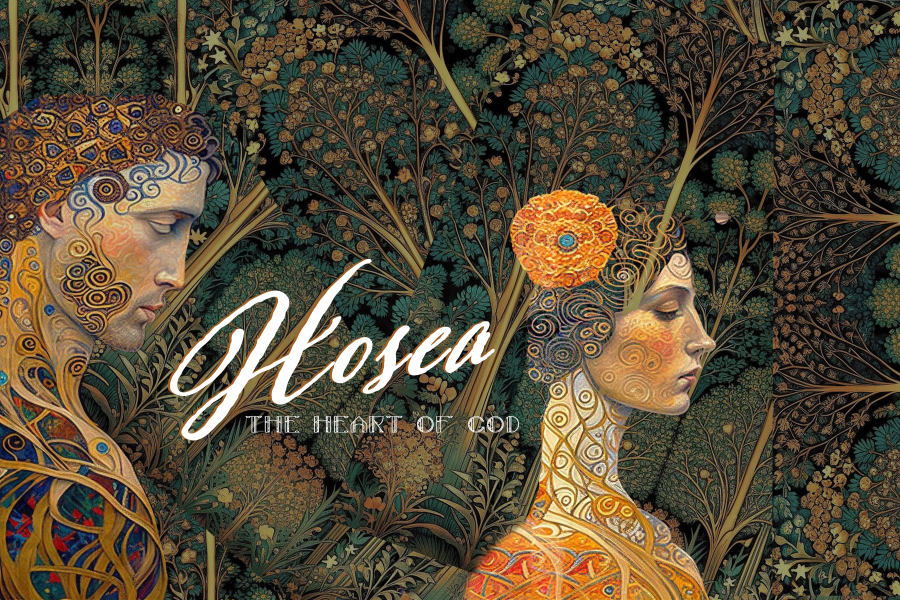
So far in the book of Hosea, the first three chapters gave us Hosea’s marriage to Gomer, which represented Yahweh’s covenant with Israel. Chapter 2 gave us God’s plan for Israel in a nutshell: He would severely discipline her but ultimately bring her back to Himself. Chapter 3 gave us a picture of that predicted redemption through Hosea’s redemption of Gomer.
Chapter 4 begins the second major section of the book. With the living parable of Hosea and Gomer established, the remainder of the book presents the oracles of Yahweh given through Hosea. Oracles are often given in the form of poetry, making them one of the most common types of poetry in Scripture. But what is an oracle? An oracle is essentially a poetic sermon (or perhaps a sermonic poem). It is God’s prophetic word through one of His prophets.
These prophecies generally serve two functions: forthtelling and foretelling. Forthtelling is a rebuke against present sin. Foretelling is a prediction of what will happen. Crucially, some judgments are conditionally predicted and will be withheld if the people repent.
Our chapter is the first of the oracles that make up the rest of the book. Fittingly, it is essentially Yahweh’s court case against Israel. If this were a divorce court or a court inquiring if there is sufficient grounds for Israel to be put to death, this would be Yahweh’s affirmative case.
The text is divided into four sections:
- Verses 1-3: The Opening Accusation
- Verses 4-8: The Case Against the Priests
- Verses 9-14: The Case Against the People
- Verses 15-19: The Warning to Judah
THE OPENING ACCUSATION // VERSES 1-3
Hear the word of the LORD, O children of Israel, for the LORD has a controversy with the inhabitants of the land. The first word ‘hear’ should remind us of the great confessional statement of the Old Testament: Deuteronomy 6:4, “Hear, O Israel, the LORD our God, the LORD is one.” Yet rather than summoning Israel to hear and confess the exclusive divinity of Yahweh, this is a courtroom summons. It is as if Hosea is saying, “Hear ye, hear ye, court is now in session.”
The LORD has a controversy against the inhabitants of the land. This word rib will be used again in 12:2. It establishes the primary accusation against Israel. This is Yahweh v. Israel.
There is no faithfulness or steadfast love, and no knowledge of God in the land. Faithfulness and steadfast love were both mentioned in 2:19-20, where God promised to betroth Himself to them in faithfulness and in steadfast love. The LORD would establish His covenant with them, which they were presently scorning. Also, notice that 2:20 ended with the promise: “And you shall know the LORD.” That promise was needed because there was presently no knowledge of Yahweh in Israel. Indeed, this is Israel’s core sin.
Why is the failure to know God the core sin? Recall that Paul in Romans 1 tells us that more egregious sins follow the root sins of not honoring God as God nor giving thanks to Him. Both are predicated on the knowledge of God. By rejecting the knowledge of God, a people are always also refusing to honor and give thanks to Him. Besides, since you cannot imitate a God that do not know, failing to know God always leads to further sin.
We see this in verse 2: There is swearing, lying, murder, stealing, committing adultery. They break all bounds, and bloodshed follows bloodshed. These are clearly from the Ten Commandments. The law of God reveals who God is and what He is like. By rejecting that knowledge, the people necessarily dive into the very things that God strictly forbids.
The opening accusation concludes with verse 3: Therefore the land mourns, and all who dwell in it languish, and the beasts of the field and the birds of the heaven, and even the fish of the sea are taken away. Notice that this continues to explain the need of the covenant in chapter 2. That covenant would be made creational because their sin had affected all of creation. Israel, like Adam, was supposed to work the Promised Land and keep, exercising dominion over all the creatures within it. But like Adam, they failed to do so. Thus, the LORD warning in Leviticus 18:24-25 was coming true:
Do not make yourselves unclean by any of these things, for by all these the nations I am driving out before you have become unclean, and the land became unclean, so that I punished its iniquity, and the land vomited out its inhabitants.
THE CASE AGAINST THE PRIESTS // VERSES 4-8
Now the general charge has been brought, Yahweh begins by presenting His case against the priests: Yet let no one contend, and let no one accuse. For with you is my contention, O priest.
Who are the priests? In Leviticus and Numbers, we learn who the priests ought to be. They were of the tribe of Levi and specifically from the family of Aaron. That is our baseline knowledge of the priests. Indeed, I am increasingly convinced that properly understanding the Old Testament begins with knowing the Genesis-Deuteronomy.
We must also remember that Hosea is specifically speaking to the northern kingdom of Israel that broke away from David’s lineage, leaving only Judah and Benjamin. At the formation of the northern kingdom, Jeroboam I was afraid that if the people traveled to the temple in Jerusalem, they would eventually return to serving David’s family as their king. Thus, Jeroboam set up two temples with two golden calves in Bethel and in Dan.
And he establishes them as temples to Yahweh. We would do well to remember that there are two forms of idolatry: blatant and subtle. Blatant idolatry is the outright worship of other gods. Israel did this with Baal, while the modern world typically worships the god of self. Subtle idolatry, on the other hand, is the worship of Yahweh in a form which He does not permit. Just with Aaron, the golden calves were forbidden by the 2nd Commandment, even if the priests called them a representation of the LORD.
Sadly, this is still present today in the church. Christ tells us plainly: “If you love me, you will keep my commandments” (John 14:15). Many today respect Jesus as a good teacher. Many claim to love Jesus, while refusing to read the Bible because it only teaches a religion rather than a relationship. Sadly, it is not only individuals but whole churches and even denominations that share that attitude. A failure to worship Jesus as He is revealed in Scripture is idolatry. It is the worship of a Jesus fabricated within one’s own mind. Simply put, no one can call themselves a follower of Christ who does not strive to follow His commandments as revealed in the Scriptures.
The priests of Israel were likewise idolatrous. In 1 Kings 12:31, we read, “He also made temples on high places and appointed priests from among all the people, who were not the Levites.” Thus, while the priests were supposed to instruct God’s people in the law as they offered the sacrifices, these priests were actively ministering in opposition to God’s commandments.
God is focusing on the priests first because they were supposed to teach the people. Verse 5 lumps the prophets within this judgment as well.
Verse 6 again addresses the root of the problem:
My people are destroyed for lack of knowledge. Because you have rejected knowledge, I reject you from being a priest to me. And since you have forgotten the law of your God, I will also forget your children.
This verse alone should tell us definitively that ignorance is not bliss. God does not desire His people to be ignorant. Instead, God gives us a whole book of the Bible that repeatedly commands us to pursue knowledge, understanding, and wisdom. Indeed, if you read Hosea in light of Proverbs, the people are quite clearly following after the forbidden woman. They are being seduced by folly.
In verse 7, we learn that the more the priests increased, the greater was their sin against Yahweh. We ought to take this as a warning that multiplication and growth are not inherently good. If numerical increase is achieved through sinful means, then the result is simply an increase in sin.
Finally, in verse 8, we read: They feed on the sin of my people. They are greedy for their iniquity. The ESV has a footnote that shows that sin could be read as sin offering. I think that is the better reading because the priests facilitated the offerings and got their food from them. But as we said in Leviticus, sin and the sin offering are the same word in Hebrew. Even though the priests ate of every offering except the burnt offering, the sin offering is probably used here because it can also be read as the ESV translates it: They feed on the sin of my people. They are quite literally profiting from the sins of God’s people.
Even though we do not have priests today, the closest equivalent are pastors and teachers. False teachers receive the harshest words of rebuke in the New Testament. Like the sinful priests in the Old Testament, false teachers take an instrument meant for life and turn it into an instrument of death. As I argued when we considered the command not to boil a young goat in its mother’s milk, God forbids taking something appointed for nourishment and life and turning it into an instrument of death. The priests were given the knowledge of God to give life to God’s people, yet they rejected that knowledge and became instruments of their destruction.
James is right that not many should presume to be teachers because there is a greater judgment for them. Even so, how many preachers fail to proclaim and exposit God’s Word from the pulpit! How many fail to teach from the Scriptures the knowledge of God and His commandments!
THE CASE AGAINST THE PEOPLE // VERSES 9-14
Verse 9 is a transitional verse that applies both to the priest and the people, for they shall both be punished together. The priests certainly bear a greater judgment, but the people by no means innocent.
Verses 10-11 are rich. The first two lines show the reality of sin. It always promises satisfaction that it cannot deliver. Sin is almost always pleasant for a moment, but it cannot sustain. So it would be with their food. They would eat but never be satisfied.
Interestingly, we do that to ourselves today. Processed food is now chemically designed not to leave us satiated. That is why companies issue the challenge that you cannot eat just one. You can only do so by actively warring against your own biological response. That, of course, leads to buying more food.
The second line also applies to us: they shall play the whore, but not multiply. The sexual revolution has left us with a historically low global birth rate. That is always the pattern with decadent and declining societies. Of course, the Song of Songs celebrated marital intimacy without any direct reference to children. Even so, children are the chief fruit and blessing of marital intimacy, and throughout Scripture, childlessness is a grief and even a curse to be borne. What should we conclude of our present age whenever many now willingly choose what historically was considered a curse?
Because they have forsaken the LORD to cherish whoredom, wine, and new wine, which take away the understanding. How tragic is it to forsake the Creator but to cherish and hold dearly sexual immorality and drunkenness? And notice the pairing of these sins. We easily recognize that alcohol takes away understanding whenever it is abused, but what about whoredom?
Sexual immorality also strips away one’s understanding. This too is a plague upon our own land. Nearly all men and many women regularly consume pornography, and sex is now assumed within a dating relationship. But how has this taken away understanding? Don’t we have smart phones and AI now?
Perhaps. But God’s assessment of Assyria applies to us as well: they do not know their right hand from their left. If that sounds like an exaggeration, one of our sitting Supreme Court Judges could not answer the question: what is a woman? Plato wrestled with the meaning of justice, and Aristotle pondered the nature of friendship. We have warred against the very concept of male and female.
Doug Wilson once noted how we can become frustrated with people who are descending into sin, wondering how they cannot see the obvious consequences of their actions. But he notes that it doesn’t get any easier to see the further down you go into the pit. The further a person turns away from God, their minds become more foolish and their hearts become more hardened. They become like Pharaoh, who charged into the Red Sea even though God by no means hiding His trap. But how is a society that murders and chemically castrates its children any different? Sin takes away understanding. Like ancient Israel, like modern USA.
Verse 12 and the first part of verse 13 are essentially Exhibit A and B of the folly of idolatry. They turns away from the living God to ask their walking stick to give them divine counsel. They also worship at the high places, thinking that they will be nearer to heaven, and under trees because they like the shade. They worship according to their own comfort.
The end of verse 13 and verse 14 conclude this section: therefore your daughters play the whore, and your brides commit adultery. I will not punish your daughters when they play the whore, nor your brides when they commit adultery. Given the evidence, why would God declare that He will not punish Israel’s bride and daughters? For the men themselves go aside with prostitutes and sacrifice with cult prostitutes. First, whoredom and adultery are somewhat punishments themselves. Being handed over to such sins is one form of God’s punishment. Second, the LORD is announcing that He will not defend the honor and respect of the Israelite men. They would very likely call for God to judge their daughters and brides for committing such sins and bring shame to their household, even though they were committing the very same sins with the daughters and brides of other men. Yahweh is essentially saying, “No, I will not punish them for disrespecting you and breaking their covenant with you. They learned their whoring from you.”
Consider the final line of verse 14: A people without understanding come to ruin. This is the parallel of verse 6. Those who reject the knowledge and understanding of God must always come to ruin and destruction, and there are too many examples in history to recount. The kingdom of God alone will endure. Christ Himself builds it and puts His law in His people’s hearts that they all know the LORD.
THE WARNING TO JUDAH (AND TO US) // VERSES 15-19
The oracle ends by addressing the southern kingdom of Judah rather than Israel. Although idolatry was certainly present in Judah, that kingdom had periods of general faithfulness under righteous kings, whereas Israel had none. Thus, Yahweh made Israel into a warning for Judah.
Though you play the whore, O Israel, let not Judah become guilty. Enter not Gilgal, nor go up to Beth-aven, and swear not, “As the LORD lives.” Gilgal was the home of the tabernacle before the temple was built and had likely become another place of idolatry. Most commentators agree that Beth-aven refers to Bethel. Bethel means ‘House of God,’ but Beth-aven means ‘House of Iniquity.’ Indeed, Bethel was home to one of the golden calves in Israel. Notice also that Israel was still invoking Yahweh’s name. They were swearing by Him, using His name in vain.
Like a stubborn heifer, Israel is stubborn. Can the LORD now lead them like a lamb in the pasture? Yahweh desires to be their shepherd, but they are too stubborn to be led. In fact, they are like a heifer, which is ironic. They were worshiping a golden calf, after all. Cultus cultivates culture. We become like what we worship. Worship always shapes how we live.
When it comes to changing ourselves or even changing the culture around us, we think of laws, policies, events, habits, etc. Worship is rarely on the list. Yet worship is at the heart of everything we do. Worship of Yahweh is the highest goal in this life and the great promise of the life to come. If we desire to change ourselves and society, let us first address who and how we worship. Everything else will follow.
Am I being too simplistic? “Seek first the kingdom of God and his righteousness, and all these things will be added to you” (Matthew 6:33).
If society is filled with liars, thieves, adulterers, and murders, those sins cannot only be addressed by striking at the root: not honoring God as God nor giving thanks to Him. The answer is difficult but simple. “One thing is necessary.” Seeking the kingdom of God first really does end with everything being added. Know God and do what He commands.
Verses 17-19 give a second warning to Judah about Israel, which is here called by its most prominent tribe: Ephraim.
Ephraim is joined to idols, leave him alone. When their drink is gone, they give themselves to whoring; their rulers dearly love shame. A wind has wrapped them in its wings, and they shall be ashamed because of their sacrifices.
Like Psalm 1 promises, the wicked were about to be blown away like chaff in the wind. Here the LORD warned Judah to stand back and leave them to their destruction, to refrain from joining in their sin. It is the same warning we find throughout Scripture. Do not go down the path of folly and death. Keep God’s commandments instead. Store up His Word in your heart that you might not sin against God.
Are we doing that? I pray that it is the case. May we continue to be a church bursting with kids and with men and women whose heart always asks, “What does Scripture say?” May that be true us individually, in our households, and in our overall community. May we be a microcosm of what we want the world to look like. Because, at the end of the day, that is all we can do. That is how we change the world.
Boaz couldn’t control the times in which he lived. He could only decide what to do with the time he was given. He could make his own field safe for a vulnerable widow like Ruth. He could live his own life in honor, integrity, and to the glory of God. And it was from his and Ruth’s everyday faithfulness that Yahweh raised up King David three generations later.
May we do the same. Our society is just as sinful and idolatrous as ancient Israel. Let us be like Boaz and Ruth. Let us be among the seven thousand that the LORD told Elijah had not yet bowed the knee to Baal. Our command is to cling to Christ, for He is the wisdom of God made manifest in the flesh and to know the Scriptures because they alone lead us to Christ.
Of course, we can only do so by the grace of God. Consider John’s exhortation:
Beloved, let us love one another, for love is from God, and whoever loves has been born of God and knows God. Anyone who does not love does not know God, because God is love. In this the love of God was made manifest among us, that God sent his only Son into the world, so that we might live through him. In this is love, not that we have loved God but that he loved us and sent his Son to be the propitiation for our sins. Beloved, if God so loved us, we also ought to love one another. (1 John 4:7–11)
Love summarizes both of the great commandments, and John explicitly ties love to knowing God. “Anyone who does not love does not know God, because God is love.” Proper knowledge of God must always go hand in hand with love of God and of our neighbor.
Notice how the command for us to love is real, but it flows from the love that Christ made known to us through His atonement for our sins. Just as Boaz redeemed Ruth from her widowhood and poverty and Hosea redeemed Gomer from her whoredom and slavery, Christ is the great Redeemer who purchases us to Himself through His very precious blood.
And as we come to the Table this morning, let us come knowing that we do not deserve the least of the kindnesses that God has shown to us. He has pulled us from our own darkened understanding and futility by His grace, granting us the illumination of the Holy Spirit. Let us come, then, to our Lord, our Savior, and our King. Let us proclaim Christ with this bread and cup, for He alone has cleansed us of all sin and guilt and united us together as His body.


Pingback: The Judgment Is for You | Hosea 5 – B. C. Newton
Pingback: Let Us Press On to Know the LORD | Hosea 6-7 – B. C. Newton